
Interlock and Paver Installation in Ottawa
Updated September 21, 2026
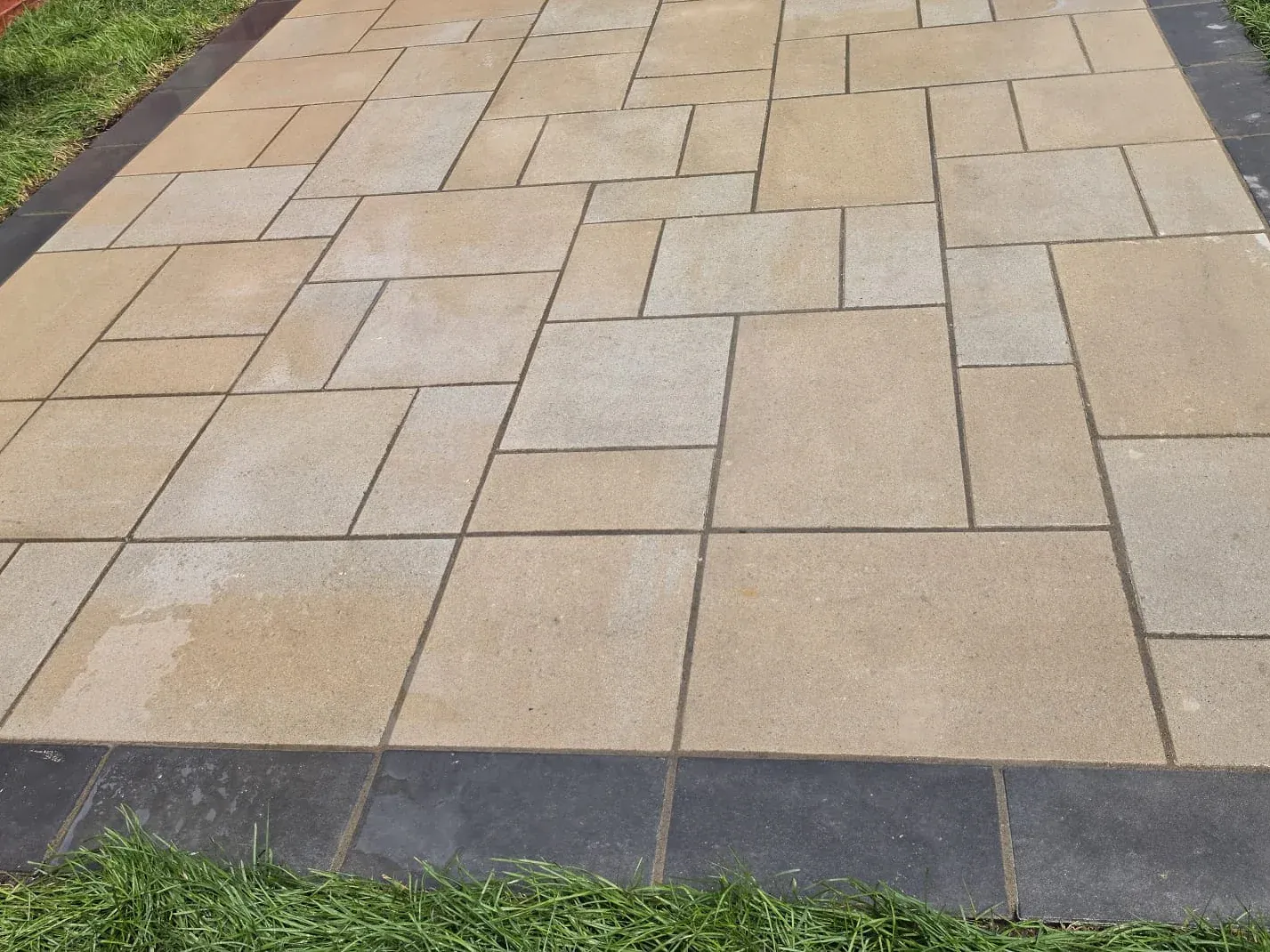
Interlocking stone and paver installation in Ottawa for driveways, patios, walkways, and steps, built on a proper compacted base to resist frost heave.
What's included
- Excavation and disposal
- Compacted granular base and bedding layer
- Paver or slab installation
- Edge restraint and polymeric sand
- Steps, borders, and retaining walls when included
- Grading for drainage away from the house
What does interlock and paver installation in Ottawa include?
An interlock project is stone paver work built on a properly compacted base: excavation and disposal, a graded granular base laid in lifts and compacted, a bedding layer of stone dust or sand, the pavers or interlocking stone themselves, edge restraint to hold the perimeter, and polymeric jointing sand swept and activated to lock the pavers together. Steps, seat walls, and retaining walls are added when the design calls for them. Each piece has a purpose: the base carries the load and drains water, the bedding layer lets pavers settle evenly, edge restraint keeps the field from creeping, and polymeric sand resists washout and weed growth. Because Ottawa’s freeze-thaw cycle punishes shortcuts, the base is the part of the job that decides whether a driveway or patio still looks level in ten years. We excavate to the required depth, grade for drainage away from the house, and compact the base in layers so it does not settle unevenly later.
How much does interlock cost per square foot in Ottawa?
Interlock is priced per square foot because area, not room count, drives the labour and material. The ranges in the pricing table on this page are typical Ottawa figures, verified September 2026, before HST. Patios and walkways sit at the lower end of the range: they carry foot traffic only, so the base can be shallower and the excavation smaller. Driveways cost more per square foot because they carry vehicle loads and need a deeper, more heavily compacted base — often 300 mm or more of granular material laid in lifts. Steps and retaining walls sit at the top of the range because they require more labour per square foot: each course needs to be levelled and pinned, drainage has to be managed behind the wall, and corners and caps involve more cuts and fitting. Your quote is a fixed, line-item price once we have measured the area, confirmed the base depth the site needs, and discussed the paver style and any borders or accents you want.
Why does a good base matter so much for interlocking stone?
The base is everything. A patio on 150 mm of properly compacted granular material over undisturbed, well-draining soil behaves very differently from one dropped on loose fill or clay that holds water. The pavers you see are only a few centimetres thick — they do not carry the load, the base does. For driveways we build a deeper base, often 300 mm or more, and compact it in lifts with a plate tamper or a jumping jack so the granular locks together and the surface carries a vehicle without rutting or settling. Poor drainage and skipped compaction are the two reasons interlock heaves and sinks in this climate. Water that cannot drain away saturates the base, and when it freezes it expands and lifts the pavers. A base that was never compacted properly settles unevenly under load, creating dips and high spots. We address both by grading for positive drainage away from the house and compacting every lift of base material before the next layer goes on. That process takes more time than dumping and spreading, but it is the only way the work lasts.
Do I need a permit for interlock in Ottawa?
A ground-level patio, walkway, or driveway paved with interlocking stone does not require a building permit — the City treats it as landscaping. A retaining wall over one metre high, measured from the bottom of the footing to the top of the wall, does require a permit because it is a structure. Work that changes lot grading in a way that affects drainage onto neighbouring properties, or that involves a new curb cut for driveway access, can trigger a permit or a grading review and sometimes needs City engineering approval. We review the site during the initial visit, flag any permit or approval requirements, and handle the application and inspections when they apply so the project stays on schedule and compliant. Most residential interlock projects — a patio, a walkway to the front door, or a driveway repaved in the same footprint — do not need permits. Source: ottawa.ca, checked 2026-09-19.
When is the best time to install interlock in Ottawa?
Interlock installs from spring thaw through late fall, once the ground is workable, frost is out of the soil, and polymeric sand can cure without rain for 24 to 48 hours. The season typically runs from late April through early November, though we watch the forecast more than the calendar. Spring and early summer slots fill first because families want the patio or driveway ready before summer gatherings, and contractors book those dates in late winter. An enquiry in January or February usually secures a May or June start; an enquiry in June often pushes to August or later. Fall is a strong season for interlock because the ground is still workable, temperatures are moderate, and the schedule is less crowded, but once frost starts returning to the soil at night we stop excavating and wait for spring. If your project includes concrete work — footings for a retaining wall, a curb, or a step — we pour that first and let it cure before the interlock goes in, which adds a week or two to the timeline.
We would rather spend an extra day on the base than come back in three winters to fix a heaved driveway. The stone you see is the easy part.
Interlock and Pavers cost ranges
Typical Ottawa range, verified September 2026, before HST.
| Tier | Range | Typically includes |
|---|---|---|
| Patio or walkway | $20 to $40 per sq ft | Excavation, compacted granular base, bedding, standard pavers, edge restraint, and polymeric sand. |
| Driveway | $25 to $45 per sq ft | Deeper base for vehicle loads, heavier pavers, and drainage grading. |
| Steps and retaining walls | $50 to $100 per sq ft | Wall block, caps, steps, and the extra base and drainage they require, priced per square foot of wall face. |
Ranges are typical Ottawa-area figures in Canadian dollars (CAD) before HST. Per-square-foot ranges are installed cost per square foot. Every project is quoted individually.
What drives the cost
- Base depth for frost and vehicle loads
- Paver style and thickness
- Excavation access and disposal
- Steps, walls, and lighting
How the project runs
- 1 Enquiry and site visit
- 2 Fixed line-item quote
- 3 Design and material selection
- 4 Permits, handled by us when required
- 5 Build with daily cleanup and progress updates
- 6 Walkthrough and 1-year workmanship warranty
Frequently asked questions
Why does interlock in Ottawa sink or heave?
Ottawa's freeze-thaw cycles and clay soils move any base that is too shallow or poorly compacted. A deep, well-compacted granular base, correct bedding, and drainage keep the pavers stable.
Do I need a permit for an interlock driveway or patio?
Interlock paving itself does not need a building permit. Widening a driveway or changing the curb can involve City approvals, which we confirm before quoting.
When is interlock installed in Ottawa?
From spring thaw until the ground freezes, typically late April through November. Spring and early summer slots fill first.
Do you seal interlock?
Sealing is optional. It deepens colour and helps resist stains, and we can include it in the quote or recommend a schedule for later.
Related services
Ready to plan your renovation?
Tell us about the project and we will reply with next steps and a fixed, line-item quote after a site visit.